
200 Hour Kundalini Yoga Teacher Training in Rishikesh

Course Highlights

$649

No Food & Accommodation

  • 24 Days Program
  • Certification-Yoga Alliance
  • Study Material Included

$749

Quad Shared Dorm

  • 24 Days Program
  • Certification-Yoga Alliance
  • Study Material Included
  • 3 Yogic Meals

$999

Twin Shared Room

  • 24 Days Program
  • Certification-Yoga Alliance
  • Study Material Included
  • 3 Yogic Meals

$1149

Private Room

  • 24 Days Program
  • Certification-Yoga Alliance
  • Study Material Included
  • 3 Yogic Meals

Begin your journey with 200 Hour Traditional Kundalini Yoga Teacher Training in Rishikesh, the most preferred destination for yoga, meditation, and spirituality seekers. Situated on the banks of the holy Ganges River and at the base of the powerful Himalayas, Rishikesh is an extraordinary and energetic space. And we invite you with open arms to attend our 200 Hour Kundalini YTT program here.

In this program, students are introduced to the practices of Traditional Kundalini Tantra Yoga through a balanced combination of Kundalini Kriyas, asana, pranayama, meditation, mantra chanting, kundalini philosophy, and subtle body awareness. The training focuses not only on the postures of the body but also on exploring the links between breath, energy, mind, and higher consciousness. The training leads students gradually and step by step through basic yogic practices in a safe, organized, and systematic way, which is suitable and beneficial for all levels of students.

The syllabus of this Yoga Alliance certified program is carefully designed to expose students to the traditional and the ancient yogic teachings of kudanlini yoga by using the modern educational methods. Which creates a comprehensive and practical learning experience for a new yoga students.

The primary focus of the training is to acquire knowledge of the subtle body by studying the chakras, nadis, prana, and energy awareness techniques. Students also learn how classical yogic techniques of breath, kriya, mantra, and meditation are used to develop greater balance, focus, and self-awareness. All of this is taught in a grounded manner to ensure that our students also develop their knowledge and confidence as teachers.

JNot only are you introduced to the ethereal part concerning energy and spiritual aspects of yoga but also is your training firmly based on the concrete with an excellent grounding in teaching methodology, alignment, and anatomy. Daily practice, disciplined routine, and guided self-study are also must if you're serious about becoming a teacher or simply further developing your practice, enabling continued self-discipline, and a deeper authentic experience of yoga as a complete lifestyle.

Kundalini Tantra Yoga could be understood as a practice of awakening inner awareness through disciplined practice and observation. According to yogic physiology human being are not only a physical body but also have an energetic body which get influenced by the quality of the breath, your thoughts, emotional state and more. Through the practice of asana, pranayama, mantra chanting and meditation students learn how these different practices influence both the physical and energy body.

One of the advantages of a 200 Hour Yoga Teacher Training Course is that it is a holistic program and you can fully immerse yourself in it. You are after all living in a yogic setting, following a yogic routine, eating and practicing asanas according to the yogic guidelines. You are attending lectures and discussions with students from all over the world, which giving you a different learning and self-realizing experience.

Let it also be clear that attending a kundalini yoga teacher training course is not just for someone wanting to take it up as a career. It is for any practitioner who wants his or her practice to progress beyond the occasional class here and there with more awareness, dedication, and connectivity in the practice in his or her daily life.

Benefits you can gain from enrolling in this kundalini program including

  • Become a certified yoga teacher by one of the foremost yoga schools in Rishikesh.
  • Develop a deeper understanding of Kundalini practices, pranayama, meditation, mantra, and subtle body awareness.
  • Strengthen both your physical practice and inner awareness through traditional yogic techniques and guided discipline.
  • Upon completion of the program, you will receive a 200-Hour Kundalini Yoga Teacher Training Certificate.
  • Become eligible to to join any 300 hour yoga teacher training program around the world.
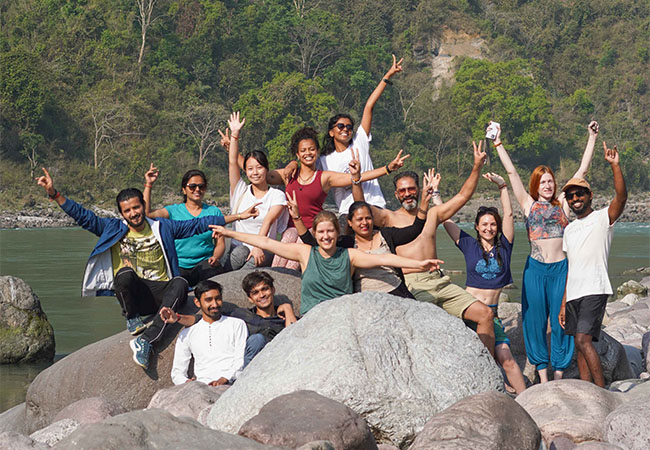
  • Practice and study in a supportive community of students interested in yoga, meditation, and spiritual growth.

Seven Chakras in Kundalini Yoga: Fundamental Foundations of Our 200 Hour Kundalini Yoga Teacher Training

One of the main teachings in our training is the knowledge and activation of seven chakras , the subtle energy centers that support balance, awareness, and spiritual growth. Students explore these chakras through theory, kriya, meditation, breathwork, and mantra practice.

By understanding how to identify energetic imbalances within these seven chakras, you will have the awareness and compassion necessary to help lead your future students through their journey of awakening.

Muladhara Root Chakra
Muladhara
Root Chakra

The foundation of stability, grounding, and survival energy.

Svadhisthana Sacral Chakra
Svadhisthana
Sacral Chakra

Governs, creativity, emotions, and pleasure.

Manipura Solar Plexus Chakra
Manipura
Solar Plexus

Holds the willpower, confidence, and transformation.

Anahata Heart Chakra
Anahata
Heart Chakra

Open the door for compassion, healing, and unconditional love.

Vishuddha Throat Chakra
Vishuddhi
Throat Chakra

Refine, communication and authentic expression.

Ajna Third Eye Chakra
Ajna
Third Eye

Support, intuition, clarity, and inner vision.

Sahasrara Crown Chakra
Sahasrara
Crown Chakra

Connects us to divine and higher consciousness.

What does and doesn't the course fee include?

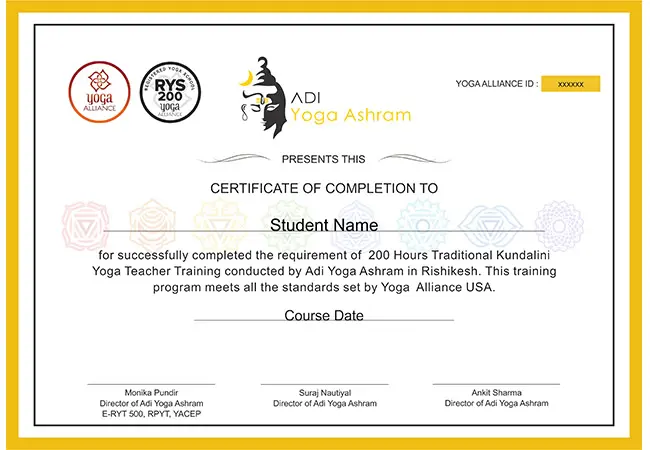
Sample Certificate

Sample Certificate

Kundalini Yoga Certification: RYT 200 (Yoga Alliance, USA)

200-Hour Yoga Alliance Logo Yoga Alliance Accreditation Logo
Our Yoga Alliance Profile →

Yoga Alliance ID: 388264

Those who have completed our 200 Hour Kundalini Yoga Teacher Training Course in India can become registered Yoga Teachers with Yoga Alliance USA. Adi Yoga Ashram is an official Registered Yoga School (RYS 200), which means that our syllabus has met the international criteria for ensuring proper instruction, safe practice, and the transmission of the authentic teachings of yoga.

By having a global recognition card from Yoga Alliance, you will be accepted as a professional worldwide. It doesn't matter if you want to open a Kundalini center in your particular country, if you are planning to do international retreats, or even if you would like to teach kriyas online, this certification helps to prove your talent and experience internationally in more than 160 countries.

Requirements & Eligibility for 200 Hour Kundalini Yoga TTC

Before reserving your spot at Adi Yoga Ashram, we kindly ask all applicants to consider our admission guidelines in order to create and maintain a focused, serious, and mature learning environment:

Skill Level: This training is suitable for all levels, from beginner to intermediate. While previous experience is Kundalini yoga is not obligatory, an earnest desire to explore, an open heart, and a dedication to the spiritual path are necessary.

Physical & Mental Health: Kundalini yoga requires rigorous energy cultivation, daily asana, breathwork, and long meditations. We require that applicants are in good physical and mental health as this program is intense and not suitable for those with serious chronic medical conditions or major active injuries.

Language Proficiency: Please note that all classes, lectures, and course manuals are provided in the English language only. Hence, we expect our students to have the necessary language capabilities to understand philosophical topics and actively engage in group discussions.

Age Requirement: We require our students to be a minimum of 16 years of age to be accepted for the program.

Ashram Discipline: Such a training necessitates getting away from the usual distractions of life. Students must be able to commit fully to a rigorous daily routine, group-living guidelines, and their own progress through steady study and sadhana.

Course Syllabus - 200 Hours Kundalini Yoga Teacher Training

The Kundalini syllabus of Adi Yoga Ashram is designed in accordance with the Yoga Alliance. It is expertly created by our senior teachers, this all-encompassing outline, finely connects old ancient sacred heritages with modern instructions, including the following fundamental energetic, philosophic, and practical yogic aspects:

Yoga Practice & Technique

Traditional Hatha Yoga - Foundation for Kundalini

This module will introduce you to classical Hatha methodology that serves as our literal foundation and prerequisite for all advanced Kundalini Tantra practices with an access to practice grounded in ancient lineage. We begin at the physical level, purifying the body to open the subtle channels through the breath. Balancing the solar and lunar energetic currents ($Pingala$ and $Ida$) allows you to become ultra-sensitive to the flow of pranic energy in the body, developing a heightened relationship to the breath.

Practice Essentials

  • Core philosophy and traditional principles of Hatha Yoga
  • Cultivating the triad of breath, posture, and inward witness awareness
  • Classical Surya Namaskar (Sun Salutations) with focus on energetic flow
  • Chandra Namaskar (Moon Salutations) for cooling and balancing
  • Pawanmuktasana joint-freeing series for channel purification

Asana Alignments & Classifications

  • Rooting & Grounding: Standing postures for stability (including Trikonasana and Virabhadrasana)
  • Kneeling & Axis Alignment: Vajrasana series and core extensions (including Ustrasana and Mandukasana)
  • Spinal Extension: Forward folds for nervous system calming (including Paschimottanasana and Janu Sirsasana)
  • Heart Opening: Backward extensions for energy expansion (including Bhujangasana and Dhanurasana)
  • Rotational Mobility: Spinal twists for detoxification (including Ardha Matsyendrasana)
  • Pelvic Freedom: Hip-opening series (including Baddha Konasana and Upavistha Konasana)
  • Equilibrium & Focus: Balancing postures for mental concentration (including Vrikshasana and Garudasana)
  • Energy Inversion: Introduction to inverted extensions (including Sarvangasana and Halasana)
  • Somatic Integration: Restorative postures for deep relaxation (including Shavasana and Makarasana)

Asana Sequencing & Flow

  • Structuring foundational standing sequences for stability
  • Seated and supine sequencing models for energy internalization
  • Integrating hip-opening and rotational twist sequences smoothly
  • Balancing forward folds and backbend sequences for nervous system regulation
  • Master principles of hatha sequencing and class design
Kundalini Kriya & Practice

Kundalini Kriyas are traditional yogic practices that aim to awaken the dormant energy at the base of the spine and guide it upward through the seven chakras. These practices combine specific movement sequences, breathing techniques, mantra, awareness, and energy locks to support the flow of prana through the subtle body. The purpose is to cultivate higher awareness, inner transformation, and connection with one’s deeper spiritual nature.

Kundalini Kriya Practices

  • Traditional Kundalini kriya practices
  • Breath and movement coordination in kriya
  • Dynamic movement and energy activation practices
  • Awareness-based movement sequences
  • Basic cleansing and preparatory kriyas
  • Chakra-focused Kundalini kriya sequences

Chakra & Energy Awareness

  • Introduction to the seven chakras
  • Chakra visualization and concentration techniques
  • Awareness of energetic imbalances
  • Breath awareness during chakra-focused practices
  • Seed mantra and sound vibration in Kundalini practices
  • Chakra crystal healing

Bandha, Mudra & Energy Locks

  • Basic mudras and bandhas used in Kundalini practices
  • Relationship between bandhas, breath, and pranic flow
  • Safe application and awareness during practice

Safety, Discipline & Practice Guidelines

  • Preparatory requirements for Kundalini practices
  • Importance of gradual progression and regular practice
  • Physical, emotional, and energetic awareness during practice
  • Contraindications and safety considerations for beginners
Shatkarmas- The Yogic Cleansing

There are traditional yogic cleansing methods known as Shatkarma that serve to purify the body and get the energetic system in order for spiritual practices. When you are practicing Kundalini Yoga, these techniques become helpful to clear out any blockages, allowing prana to move in nadis with a more even flow and making way for a higher level of awareness to be awakened.

  • Introduction to Shatkarma and energetic purification
  • Preparatory role of cleansing practices in Yoga
  • Benefits, safety precautions, and general practice guidelines
  • Jala Neti (water cleansing)
  • Sutra Neti (cleansing with rubber catheter)
  • Kunjal Kriya/Vaman Dhauti ( cleansing of stomach)

Subtle Body & Energy Practices

Mantra Chanting & Sacred Sound Practices

You will find that the chanting of mantras is at the heart of yoga practice. It is a way to bring about spiritual awakening and a sense of inner calm through repetition, sound, and vibration to steady the mind. In class, we cover the proper way to recite these ancient Vedic mantras, and when they are chanted properly, they can leave a subtle effect on the practitioner.

  • Introduction to mantra chanting and sound vibration
  • Correct pronunciation and breath coordination
  • Traditional opening and peace mantras
  • Aum Namah Shivaya
  • Gayatri Mantra
  • Patanjali Invocation Mantra
  • Universal peace and wellbeing mantras
  • Maha Mrityunjaya Mantra
  • Food prayer and gratitude mantra (Aum Brahmarpanam)
Pranayama & Breath Awareness Practices

Pranayama is an ancient practice developed by yogis to regulate life energy, also known as prana, throughout the body. These breathing techniques help create a deeper connection between the breath and the mind, preparing the practitioner for meditation and inner awareness.

Foundations of Pranayama

  • Historical understanding of pranayama
  • Introduction to prana and the pranic body
  • Five major pranas and energetic functions
  • Nadis: Ida, Pingala, and Sushumna
  • Four aspects of pranayama practice

Breath Anatomy & Nervous System

  • Basic anatomy of the respiratory system
  • Diaphragm function and breathing mechanics
  • Understanding the nasal cycle
  • Sympathetic and parasympathetic nervous system
  • Breath and nervous system regulation

Breathing Awareness Practices

  • Abdominal (diaphragmatic) breathing
  • Thoracic breathing
  • Clavicular breathing
  • Full yogic breathing

Traditional Pranayama Techniques

  • Surya Bhedana & Chandra Bhedana
  • Nadi Shodhana (alternate nostril breathing)
  • Ujjayi Pranayama
  • Kapalbhati cleansing breath
  • Bhastrika Pranayama
  • Sheetali & Sheetkari Pranayama
  • Bhramari Pranayama

Practice Challenges & Teaching Methodology

  • Stress and breathing patterns
  • Role of exhalation and relaxation
  • Common breathing difficulties
  • Common issues faced by students
  • Teaching progression and sequencing
  • Voice modulation and class guidance
Mudra Bandha & Kriya

In the tradition of yoga, mudras and bandhas are employed to govern the body’s prana and put one in a better frame of mind for concentration, meditation and an awareness of energy. With Kundalini Yoga in particular, students come to understand how these gestures and locks, along with more subtle internal work, can be put to use. They are a means of steadying the mind and channelling energy, which in turn helps deepen and improve their pranayama and meditation practices.

Foundations of Mudra & Bandha

  • Introduction to mudras and bandhas
  • Importance of mudras and bandhas in yogic practice
  • Benefits, contraindications, and safety awareness
  • Types and categories of mudras and bandhas

Hasta, Shirsha & Adhara Mudras

  • Practice of hand gestures (Hasta Mudras)
  • Practice of head gestures (Shirsha Mudras)
  • Practice of perineal gestures (Adhara Mudras)
  • Awareness and application during meditation and pranayama

Pranic & Elemental Mudras

  • Panch Prana Mudras
  • Pancha Tattwa Mudras
  • Relationship between mudras, elements, and pranic balance
  • Mudras for concentration and energetic awareness

Bandha Practices & Energy Locks

  • Mula Bandha
  • Uddiyana Bandha
  • Jalandhara Bandha
  • Maha Bandha
  • Safe application and energetic awareness during practice
Meditation (Dhyana)

Meditation in Kundalini Yoga is practiced as a method of developing subtle awareness and deeper connection with the the self. Through a combination of both traditional and modern meditation techniques, students learn how breath, sound, concentration, movement, and observation influence the mind and emotions, and energetic state of the practitioner.

Introduction to meditation

  • Origin and history of meditation
  • Meditation postures and sitting awareness
  • Do’s and don’ts for meditation practice
  • Importance of breath in meditation
  • Importance of grounding and preparation practices

Awareness & Mindfulness Practices

  • Mindfulness meditation
  • Breath awareness meditation
  • Body scanning meditation
  • 31-points guided meditation
  • Inner observation and sensory awareness

Meditation Postures, Mudras & Drishti

  • Traditional meditation sitting postures
  • Chin Mudra, Gyan Mudra, Yoni Mudra, and Dhyan Mudra
  • Shambhavi Mudra and Nasikagra Drishti
  • Meditation Pose

Traditional Meditation Techniques

  • Trataka meditation
  • AUM chanting meditation
  • Japa meditation
  • Ajapa meditation
  • Guided chakra meditation
  • Yoga Nidra practice

Dynamic & Expressive Meditation Practices

  • Dynamic meditation
  • Music meditation
  • Gibberish meditation
  • Drawing meditation
  • Dancing meditation

Relaxation Concepts & Discussion

  • 1:2 calming breath for stress and panic regulation
  • Barefoot grounding and nature awareness
  • Shavasana and prone relaxation position
  • Salt bath and energetic cleansing concepts

Human Science & Biomechanics

Yoga Anatomy, Physiology

We have put together the anatomy portion of the course so that students can get a better handle on how the body is meant to move, breathe and react in the context of yogic and Kundalini work. By drawing on both modern anatomical theory and what the yogic tradition has to teach us, we aim to foster a greater sense of alignment and efficiency in your movement. This approach is there to make your asana, pranayama, kriya and meditation sessions not only more effective but also safer, with an eye toward proper posture and breath coordination.

Applied Yoga Anatomy

  • Alignment awareness in yoga postures
  • Stability, mobility, and balance in asana practice
  • Understanding muscle engagement and stretching
  • Injury prevention and safe movement principles

Foundations of Human Anatomy

  • Understanding posture and body alignment in yoga practice
  • Anatomical planes and directional movements
  • Fundamental anatomical movements in yoga
  • Types of joints and joint mobility
  • Relationship between muscles, posture, and movement

Physiology & Internal Systems

  • Respiratory system and breath mechanics
  • Digestive and circulatory systems
  • Nervous system and stress response
  • Endocrine system and hormonal balance
  • Introduction to chakras and energetic body awareness

Skeletal System & Structural Alignment

  • Structure and function of the spine
  • Pelvic alignment and stability
  • Natural curves and deformities of the spine
  • Knee structure and movement mechanics
  • Tendons, ligaments, and connective tissues

Muscular System & Functional Anatomy

  • Introduction to major muscle groups used in yoga
  • Chest and abdominal muscles
  • Shoulder and upper back muscles
  • Hip flexors and pelvic muscles
  • Arm muscles

Yoga Humanities & Philosophy

Kundalini Philosophy

With Kundalini Philosophy you will delve into the way traditional yoga views consciousness, subtle energy and the process of spiritual awakening. We put students in touch with the symbolic and philosophical underpinnings of Kundalini Yoga. You can expect to cover the likes of chakras, nadis and prana as well as the Shiva and Shakti dynamic, and how a disciplined approach to yogic practice is meant to rouse a higher level of awareness.

Introduction

  • Historical origins of Kundalini and Tantra traditions
  • Introduction to yogic and tantric worldviews
  • Purpose of Kundalini Yoga in traditional systems

Human Consciousness in Yogic Philosophy

  • The nature of mind and ego in yoga
  • Consciousness and self-awareness
  • Attachment, suffering, and liberation
  • Inner transformation through yogic discipline

Symbolism in Kundalini Traditions

  • Symbolic meaning of Shiva and Shakti
  • Symbolism of chakras in yogic philosophy
  • Sacred sound and mantra symbolism
  • Symbolic understanding of awakening and transformation

Yogic Lifestyle & Spiritual Discipline

  • Methods of awakening
  • Prepration, Diet and Risks
  • Ethical foundations in yogic life
  • Obstacles on the spiritual path
Yoga Philosophy & Yogic Lifestyle

With yoga philosophy, students are put in touch with the old wisdom and traditional teachings that underpin any yogic life or practice. It is a way of getting to know the purpose of yoga on more than just a physical level. By delving into the classical concepts and scriptures as well as the spiritual disciplines of the tradition, one comes to a better grasp of self-awareness and conscious living, and what it means to grow from within.

Traditional Paths of Yoga

  • Introduction to the major paths of yoga
  • Karma Yoga – the path of action
  • Bhakti Yoga – the path of devotion
  • Jnana Yoga – the path of wisdom and self-inquiry
  • Raja Yoga – the path of meditation and mental discipline
  • Hatha Yoga – balancing body and pranic energies
  • Mantra Yoga – the science of sound and vibration

Foundations of Yogic Philosophy

  • Introduction to Sanatana Dharma and yogic traditions
  • Overview of important scriptures of Sanatana Dharma
  • Understanding the purpose and goal of yoga
  • Definition of yoga according to Yoga Sutras and Bhagavad Gita

Raja Yoga & Eight Limbs

  • Introduction to Raja Yoga philosophy
  • Study and discussion of the Eight Limbs of Yoga
  • Ethical foundations and yogic discipline

Yogic Life & Human Development

  • The four stages of life (Ashramas)
  • Brahmacharya
  • Grihastha
  • Vanaprastha
  • Sannyasa
  • The four Purusharthas
  • Dharma
  • Artha
  • Kama
  • Moksha

Excursion Included In This Course

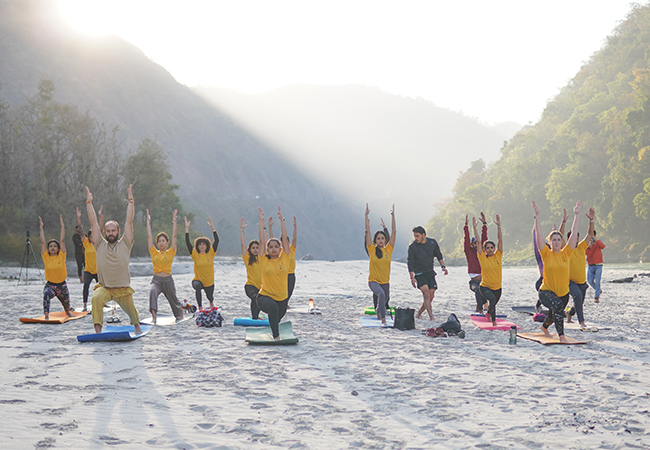
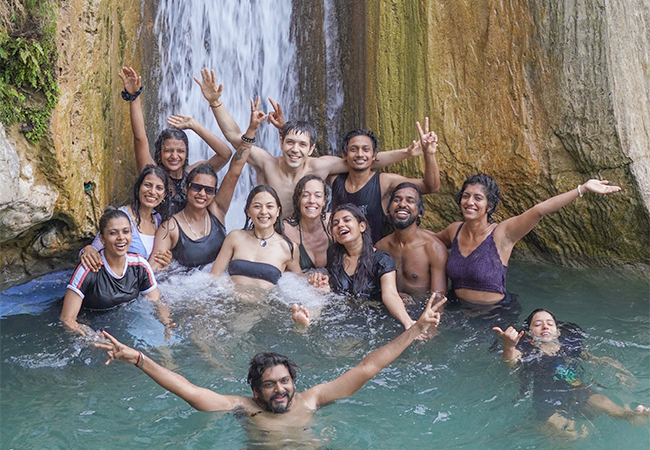
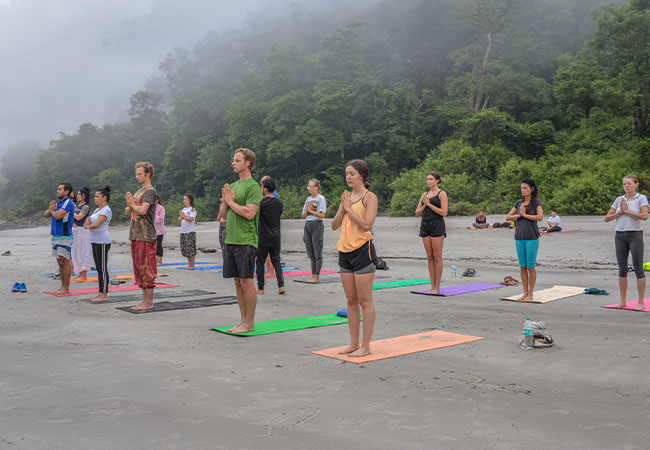
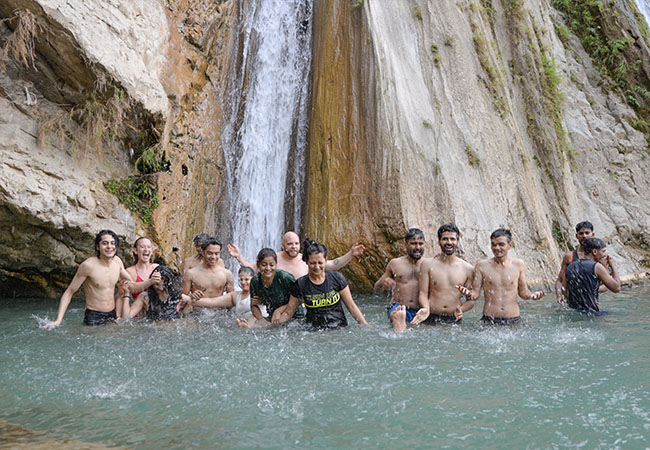
In order for our bodies and minds to rejuvenate, it is essential to have leisure time. When combining this need for relaxation with our course, the experience of learning becomes even more enjoyable amidst the captivating surroundings of Rishikesh. As part of our program, we organize guided excursions on Sundays to various remarkable destinations including Kunjapuri Temples, Waterfall, Beach Yoga, Vashishta Cave, and more. These tours are included in the course fee, ensuring a comprehensive experience for all participants. On Sundays, we exclusively provide breakfast, allowing you the freedom to savor delectable lunches and dinners at local restaurants, while also immersing yourself in the vibrant food culture of Rishikesh.

Why Choose Rishikesh for Yoga and a Brief Overview of the Course

Exploring the Benefits of Yoga Teacher Training in Rishikesh

Rishikesh - A Hub for Authentic Yoga Schools!

Rishikesh, nestled in the Northern region of India amidst the majestic Himalayas, is blessed by the holy river Ganges. This enchanting city has earned its reputation as one of the world's finest destinations for yoga. Imagine the serenity of practicing yoga while sitting on the banks of the sacred Ganges.

Rishikesh Radiates Awe-Inspiring Divine Energy!

starting on a yoga teacher training course in Rishikesh offers an unparalleled experience, thanks to the incredible ambiance, cool breeze, and serene environment. Immerse yourself in the rich Indian culture as you spend a month learning in the sacred abode once inhabited by ancient rulers and sages.

Accommodation & Premises

Clean and comfortable accommodation comprises of single private rooms and double shared & Dorm rooms with attached washrooms.

  • Room Size: 11 × 11 ft to 12 × 12 ft (≈ 12–13 m²)
  • Bathroom: Attached, 3 × 6 ft to 5 × 6 ft with (electric water heater), western toilet, and standard shower fittings.
  • Beds: Private (6 x 6 ft) ,Twin Shared (2 × single 6 × 3 ft); Dorm (2 Bunk beds 6 x 3) foam mattresses medium firmness, polyester fiberfill Pillow medium firmness
  • Storage: One Cupboard/Room (6′10″ × 3″) shared by students
  • Amenities: Ceiling fan / A C (as available), Wi-Fi ~40–60 Mbps, desk,housekeeping weekly,linen change every 3rd day

*Layouts may vary slightly between rooms in the same category.

Meals

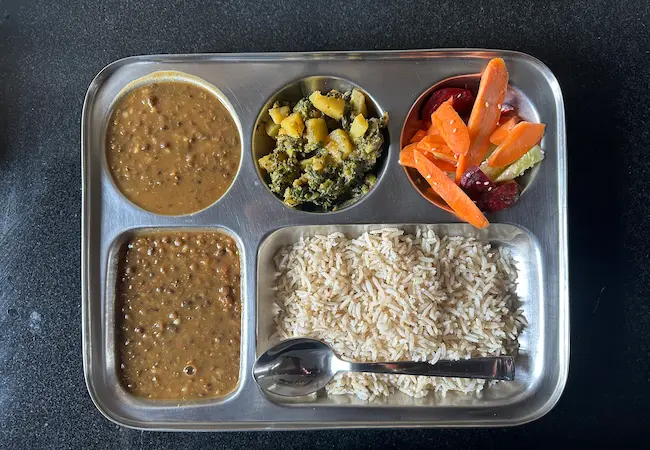
Three vegetarian nutritious, healthy and sattvic meal per day (Breakfast, Lunch and Dinner). Our simple yogic diet food is perfect for nourishing the mind, body and soul. Herbal teas are served twice a day.

  • Breakfast: includes oats, fruits, sprouts and dishes like poha, idli, or dosa, rolls etc.
  • Lunch: offers rice with lentils, seasonal vegetables, and salad.
  • Dinner: is light and comforting with soup , Chapati & Rice, lentils, Occasional sweets, herbal tea, and seasonal vegetables.
  • Highlight: No onion, no garlic, Prepared with minimal oil, Balanced with protein, carbs, and micronutrients

A Nurturing Environment with Abundant Amenities

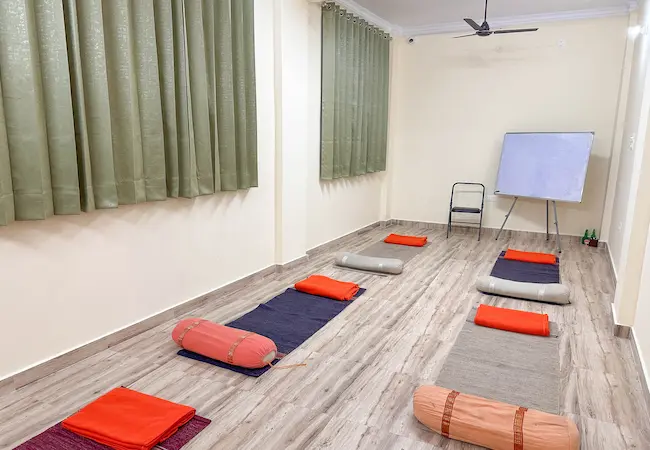
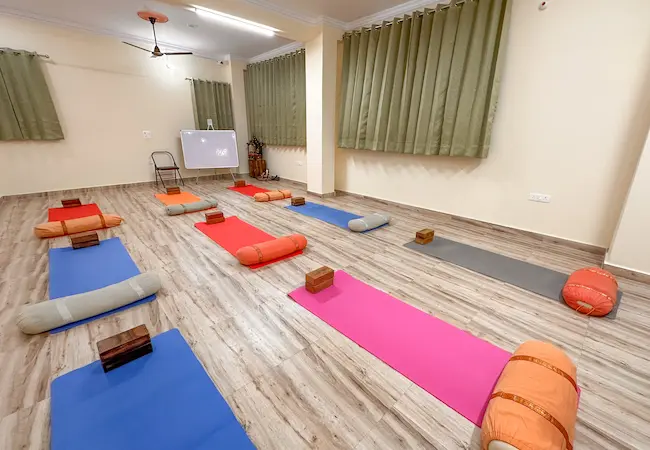
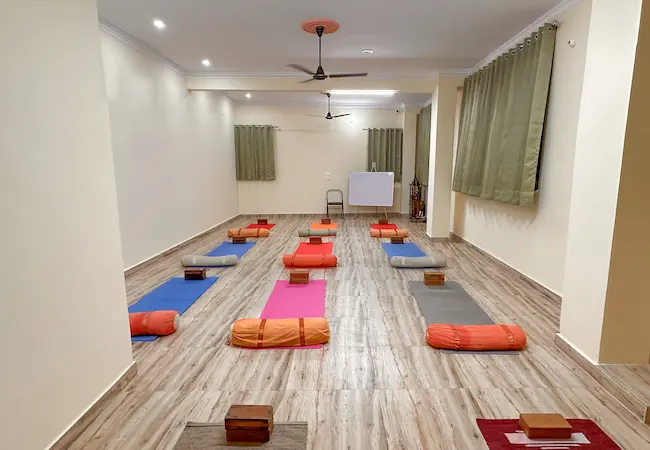
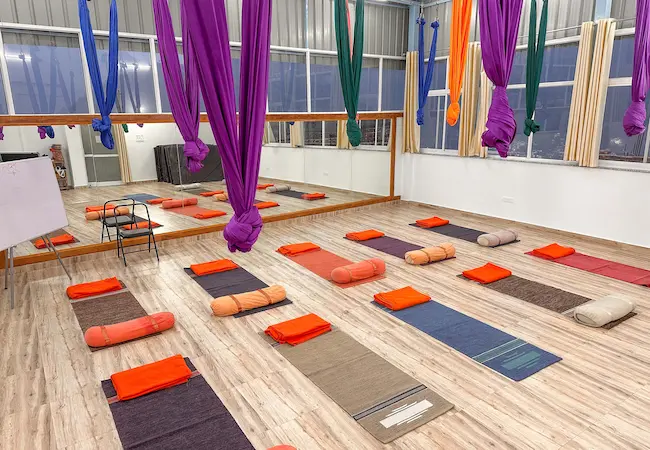
  • Two spacious and well-ventilated yoga halls
  • Air-conditioned yoga halls for optimal comfort
  • Fully furnished rooms with attached bathrooms
  • CCTV surveillance for added security
  • Round-the-clock management support available
  • Dining hall with traditional seating arrangement
  • Provision for reliable water supply and electricity
  • Convenient access to nearby laundry service
  • Proximity to local markets and cafes for added convenience

Yoga Program that Leads to RYT-300 Certification & Yoga Alliance Approval

Yoga Alliance is an esteemed international organization dedicated to supporting yoga schools and teachers worldwide. Its mission is to provide valuable resources and guidance to foster the learning and growth of yoga practitioners. The Yoga Alliance directory serves as a comprehensive listing of yoga schools and teachers who have met the organization's globally recognized training standards. Adi Yoga Ashram takes pride in being a Yoga Alliance-recognized school, ensuring that our programs meet the highest industry standards.

Upon completion of our 200-hour yoga teacher training in Rishikesh, students are eligible to pursue the 300-hour yoga teacher training course and receive a completion certification from a Registered Yoga School (RYS). This certification enables them to register as yoga teachers with the Yoga Alliance as RYT-200, an internationally recognized credential. Obtaining the RYT-200 certification demonstrates that you possess a comprehensive understanding of yoga, backed by substantial knowledge, experience, and training. It instills confidence in potential students and employers, as it signifies your commitment to meeting the Yoga Alliance's rigorous standards. Yoga Alliance plays a pivotal role in promoting the integrity and credibility of yoga education and practice worldwide. By aligning with this esteemed organization, Adi Yoga Ashram ensures that our students receive a certification that holds international recognition and value.

Here are some of the benefits of RYT-200 certification:

  • You can teach yoga professionally.
  • You can build your resume and advance your career.
  • You can connect with other yoga teachers around the world.
  • You can gain access to exclusive Yoga Alliance resources and discounts.

Note: 200 Hours Yoga Teacher Training Program is a certified Course with Yoga Alliance. Completing this program qualifies you to teach as a teacher and also allows you to pursue the 300 Hour TTC Program.

" आत्मवान् यो जनाति सर्वं तत्र को मोहः कः शोकः "

"One who knows the self sees everything in the self, and there is no more delusion or sorrow."


Brihadaranyaka Upanishad 4.4.22

Course Dates - 200 Hours Kundalini Yoga Program

Note:- During major holidays in India, such as Diwali, Holi, and Raksha Bandhan, please note that classes will not be conducted as per the regular schedule. Additionally, it is important to be aware that the graduation date for the course may be extended by a day to accommodate these holiday breaks.

Discount Offers: Take advantage of our offers! These discounts are designed to support your yoga journey and make your training more accessible. Please read the guidelines carefully to understand how and when each offer can be applied.

🎁 Early Bird

Book 20 days before & get 5% off your total fee (Everymonth for First 5 bookings).

🎁 Enroll Together (Friends Discount)

Sign up together with a friend and you both receive 8% off.

🎁 Birthday Month Discount

If your course falls in your birthday month, enjoy additional 2% off as our gift to you!.

🎁 Group Discount

Enroll as a group of 4 or more and get 10% off per person.

Course Objectives of our Yoga Teacher Training Program

The 200-hour Yoga Teacher Training program at our school is designed to provide a comprehensive and transformative learning experience for aspiring yoga teachers. Our course objectives are carefully crafted to ensure that students develop the necessary skills, knowledge, and confidence to start on their yoga teaching journey. Here are the key objectives of our program.

1. Deepen the understanding of yoga: Our training program aims to expand students' knowledge and comprehension of yoga beyond the physical postures. We delve into the philosophy, history, and principles of yoga, enabling students to develop a holistic understanding of this ancient practice.

2. Cultivate a personal practice: We emphasize the importance of a dedicated personal practice. Through daily asana (posture), pranayama (breathing), and meditation sessions, students are encouraged to develop a consistent and authentic practice that forms the foundation of their teaching.

3. Develop teaching skills: Our program focuses on developing effective teaching skills. Students learn how to structure and sequence yoga classes, deliver clear and concise instructions, and create a safe and supportive environment for their future students.

4. Explore asana alignment and adjustments: We provide in-depth knowledge of asana alignment, including proper body mechanics and adjustments. Students learn how to guide students into safe and beneficial postures, preventing injuries and maximizing the benefits of each pose.

5. Understand anatomy and physiology: An essential aspect of yoga teaching is understanding the human body. Our training includes the study of anatomy and physiology relevant to yoga practice. Students gain insights into the muscular, skeletal, and nervous systems, enhancing their understanding of how yoga affects the body.

6. Learn pranayama and meditation techniques: We introduce students to various pranayama techniques (breathing exercises) and meditation practices. These ancient practices help students cultivate mindfulness, deepen their breath awareness, and develop a calm and focused mind.

7. Study yoga philosophy and ethics: Students explore the philosophy and ethical principles of yoga, including the Yoga Sutras of Patanjali. They gain insights into the eight limbs of yoga, yamas (ethical guidelines), niyamas (self-disciplines), and the application of these principles in their personal and teaching lives.

8. Enhance teaching methodology: Our training equips students with effective teaching methodologies. They learn how to create lesson plans, manage class dynamics, provide modifications and variations for different students' needs, and offer skillful hands-on adjustments.

9. Practice teaching and receive feedback: Students have numerous opportunities to practice teaching throughout the course. They receive constructive feedback from experienced teachers, enabling them to refine their teaching skills and build confidence in their ability to lead yoga classes.

10. Embrace a yogic lifestyle: Our program encourages students to embrace a yogic lifestyle beyond the mat. We explore Ayurveda, the sister science of yoga, and provide insights into healthy dietary practices, mindful living, and self-care routines.

11. Foster self-growth and self-discovery: Beyond teaching skills, our training program aims to facilitate personal growth and self-discovery. Students are encouraged to explore their own limitations, beliefs, and fears, enabling them to connect with their authentic self and develop a strong sense of self-awareness.

12. Build a supportive yoga community: Throughout the training, students form connections and bonds with fellow participants and teachers. We foster a supportive and inclusive community that continues to inspire and uplift long after the program is completed.

Our 200-hour Yoga Teacher Training program offers a comprehensive curriculum that empowers students to become skilled and confident yoga teachers. By achieving these course objectives, students are well-prepared to start on their yoga teaching journey and make a positive impact on the lives of others through the practice of yoga.